The world of high fashion is a spectacle of creativity, where makeup artists push boundaries with bold colors, graphic lines, and unconventional textures. What struts down the runway, however, rarely translates directly to school drop-offs or office meetings. Yet there’s an art—and a growing demand—for distilling these dramatic looks into wearable, approachable versions. This isn’t about dilution; it’s about adaptation.
The key lies in identifying the essence of a trend. Take the "floating crease" eyeshadow seen at Maison Margiela—a stark, disconnected arc of pigment above the eyelid. On stage, it’s a surrealist statement. For daywear, try smudging a softer version in taupe or mauve along the orbital bone, using your fingertip to diffuse edges. The result? A subtle contour effect that lifts the eyes without shouting for attention.
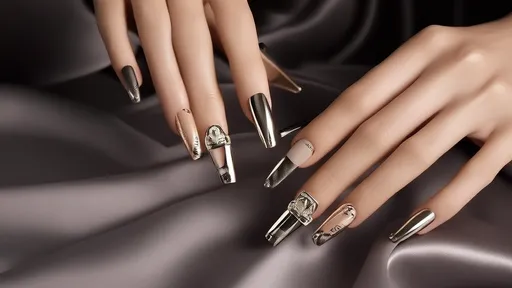
Texture transformations are equally crucial. Designers like Pat McGrath often adorn models with metallic foils or glossy, wet-look lids. While impractical for most workplaces, the vibe can be captured through finely milled shimmer shadows applied sparingly at the inner corners, or clear lip gloss patted onto the center of lips over matte color. It’s about hinting at the fantasy, not replicating it verbatim.
Color stories deserve particular consideration. Neon orange lips at Valentino? Electrifying, but intimidating. The solution: sheer out the pigment by dabbing it onto cheeks first, then blending remnants onto lips for a monochromatic stain. Alternatively, use the runway hue as inspiration to find a "sister shade"—swap that electric orange for a terracotta tint with similar warmth but lower voltage.
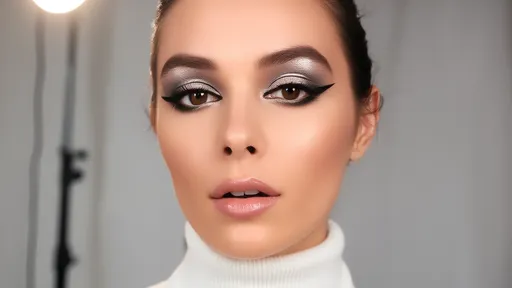
Graphic liner presents unique challenges. Hooded eyes or shaky hands make the precise geometric lines from runways feel unattainable. Here, tools matter: a flat angled brush dipped in dark eyeshadow creates softer, more forgiving edges than liquid liner. Or embrace the "broken wing" technique—intentionally leaving small gaps in the line for an intentionally undone take on the graphic trend.
Perhaps the most overlooked adaptation is in finish choices. Dewy, glass skin dominates backstage, but can turn greasy by midday. The savvy workaround? Mix a liquid highlighter with your moisturizer before foundation for luminosity from within, then set only the T-zone with powder. You maintain the healthy glow while avoiding the slip-and-slide effect.
Accessibility should never mean blandness. That rhinestone-encrusted look at Schiaparelli? Try a single delicate crystal at the outer corner. The exaggerated faux freckles at GCDS? Use a brow pen to create just three or four subtle dots across the nose. These microdoses of drama keep the spirit of the runway alive while respecting real-world constraints.
Ultimately, the magic happens in the editing. Ask: what emotion does this look convey? If it’s confidence through bold red lips, keep the color true but blot it down to a stain. If it’s playfulness via glitter tears, switch to gold-flecked eyeshadow lightly applied below the lower lash line. The runway gives us permission to experiment; our daily lives require us to curate.
This translation process isn’t about compromising artistic vision—it’s about making artistry accessible. When done thoughtfully, even the most avant-garde techniques can whisper rather than scream, allowing anyone to carry a piece of fashion’s fantasy into their everyday existence. The catwalk may be elevated, but beauty, at its best, meets people where they live.

By /Aug 1, 2025
By /Aug 1, 2025
By /Aug 1, 2025

By /Aug 1, 2025
By /Aug 1, 2025

By /Aug 1, 2025
By /Aug 1, 2025
By /Aug 1, 2025

By /Aug 1, 2025

By /Aug 1, 2025
By /Aug 1, 2025
By /Aug 1, 2025
By /Aug 1, 2025
By /Aug 1, 2025
By /Aug 1, 2025
By /Aug 1, 2025
By /Aug 1, 2025
By /Aug 1, 2025

By /Aug 1, 2025

By /Aug 1, 2025
