The fashion industry stands at a crossroads, where the shimmering runways of Paris, Milan, and New York collide with the pixelated frontiers of the digital realm. The question looming over Fashion Week’s future isn’t just about hemlines or color palettes—it’s existential. Can the tactile magic of live shows survive in an era where algorithms dictate trends and screens mediate experience? Or will digital spectacles render the traditional catwalk obsolete?
The Allure of the Physical Runway
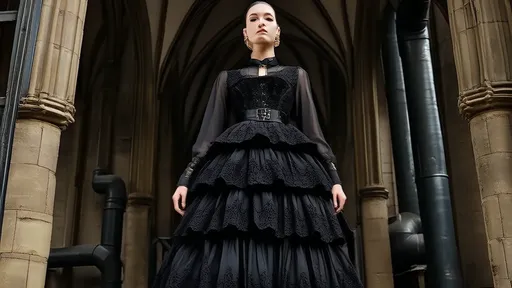
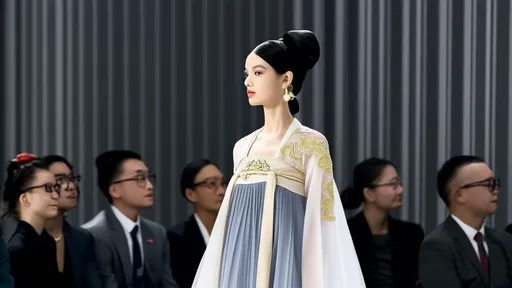
For decades, Fashion Week has been more than a showcase of next season’s designs—it’s a cultural ritual. The rustle of front-row seating, the backstage chaos of steaming garments and last-minute stitchwork, the collective gasp when a model stumbles in towering heels—these are moments no livestream can replicate. Physical shows thrive on exclusivity; an invitation signals status, and being there in person offers access to textures, details, and atmosphere that even 4K video flattens. Designers like Alexander McQueen understood this intrinsically, transforming runways into theatrical sets where clothes became characters in a larger narrative.
Yet this very exclusivity fuels criticism. When a single show’s carbon footprint rivals a small village’s annual emissions (private jets for editors, truckloads of temporary set materials), the industry’s environmental reckoning demands change. Add pandemic-era restrictions that forced brands to innovate digitally, and the case for virtual alternatives gains momentum.
Digital’s Democratizing Promise
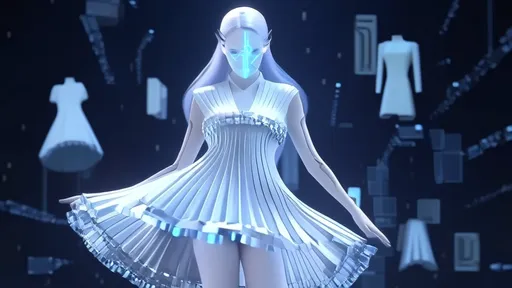
Enter the pixelated phoenix: digital fashion weeks. Platforms like Decentraland hosted entirely virtual shows where avatars wore NFT garments. Brands like Balenciaga partnered with video games to dress characters in their latest collections. The advantages are undeniable—global accessibility (anyone with WiFi can attend), reduced waste (no sample production for buyers), and creative freedom (gravity-defying designs possible only in CGI).
But early experiments reveal cracks in the digital facade. When Tommy Hilfiger’s gaming-inspired show required attendees to navigate a clunky metaverse platform, critics noted the irony: an event celebrating futuristic fashion felt technologically outdated. Moreover, digital lacks the serendipity of physical shows—the chance encounters between editors that spark collaborations, or the way fabric moves differently under showroom lights versus a screen’s backlight.
The Hybrid Horizon
Perhaps the answer lies not in replacement but reinvention. Consider Coperni’s viral spray-on dress moment: a live performance (model being painted in real time) engineered for social media sharing. Similarly, Jacquemus’s 2023 show in a lavender field blended IRL spectacle with drone footage that went viral, proving physical events can leverage digital tools to amplify impact.
Technology might enhance rather than erase the runway’s magic. Augmented reality could allow front-row attendees to access hidden design details via their phones, while remote viewers enjoy interactive 360-degree streams. Blockchain could authenticate limited-edition digital garments tied to physical pieces, merging exclusivity with innovation.
The verdict? Fashion Week won’t die—it will mutate. As designer Iris van Herpen remarked, "Craftsmanship needs oxygen." The future belongs to those who treat digital not as a threat but as another thread in fashion’s rich tapestry, weaving together the visceral thrill of live creation with the boundless possibilities of the virtual.

By /Aug 1, 2025

By /Aug 1, 2025

By /Aug 1, 2025

By /Aug 1, 2025
By /Aug 1, 2025
By /Aug 1, 2025
By /Aug 1, 2025

By /Aug 1, 2025

By /Aug 1, 2025

By /Aug 1, 2025
By /Aug 1, 2025
By /Aug 1, 2025
By /Aug 1, 2025
By /Aug 1, 2025
By /Aug 1, 2025

By /Aug 1, 2025
By /Aug 1, 2025
By /Aug 1, 2025
By /Aug 1, 2025
By /Aug 1, 2025
