In the ever-evolving landscape of fitness and rehabilitation, the subtle nuances of equipment adjustment often hold the key to unlocking optimal muscle engagement and performance. Among these nuances, the angle of exercise equipment seat remains a frequently overlooked yet profoundly impactful variable. While most users focus on weight, repetitions, or speed, the precise tilt of a seat can dramatically alter which muscle groups bear the brunt of the effort, transforming an ordinary workout into a targeted, efficient session. This article delves into the science and practical implications of micro-adjustments in exercise equipment seat angles, exploring how such minor changes can lead to significant shifts in muscular activation, injury prevention, and overall training efficacy.
The human body is a complex kinetic chain, where small alterations in positioning can redistribute forces across various muscle groups. When it comes to exercise equipment, whether on a leg press, rowing machine, or stationary bike, the seat serves as the primary point of contact between the user and the equipment. Its angle dictates pelvic orientation, spinal alignment, and hip joint angles, all of which influence which muscles are recruited during exercise. For instance, a slight forward tilt might engage more quadriceps in a leg extension, while a backward tilt could shift focus to the hamstrings and glutes. Understanding these mechanics is not just for athletes or physical therapists; it empowers everyday fitness enthusiasts to customize their routines for specific goals, be it building strength, enhancing endurance, or rehabilitating an injury.
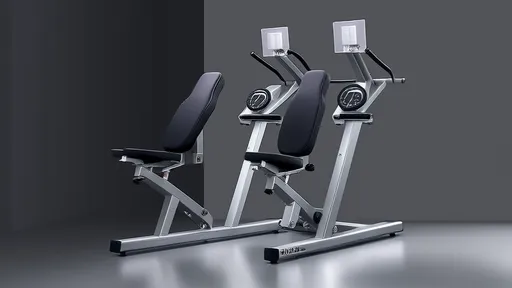
Consider the leg press machine, a staple in lower body training. Many users simply adjust the seat to a comfortable position without considering the angular impact. Research and anecdotal evidence suggest that tilting the seat forward by as little as 5 to 10 degrees can increase activation in the quadriceps, particularly the vastus medialis, due to the increased knee flexion and altered hip angle. This is particularly beneficial for those looking to develop knee stability or address muscle imbalances. Conversely, tilting the seat backward places the hips in a more extended position, which can enhance involvement of the gluteus maximus and hamstrings. This adjustment is valuable for individuals aiming to improve posterior chain strength, which is crucial for activities like sprinting or lifting.
Similarly, on a seated row machine, often used for back development, the seat angle can determine whether the emphasis is on the upper back muscles like the rhomboids and trapezius or the lower lats and erector spinae. A upright or slightly reclined seat might promote better scapular retraction, targeting the mid-back, while a forward-leaning position could engage the lats more intensely by mimicking a pull-down motion. These subtleties highlight how micro-adjustments is not about reinventing the wheel but refining it to suit individual anatomies and objectives. Personal experimentation under guided supervision can reveal the ideal settings for maximizing muscle engagement without compromising form or safety.
Beyond strength training, cardiovascular equipment like stationary bikes also demonstrate the critical role of seat angle. Cyclists have long debated the optimal saddle tilt for performance and comfort. A level seat is generally recommended for neutral pelvic alignment, but some riders micro-adjustments it slightly nose-down to reduce pressure on the perineum during intense riding, which can prevent numbness and vascular issues. However, this must be done cautiously, as excessive tilting can lead to sliding forward, increasing strain on the arms and shoulders. Alternatively, a nose-up tilt might help riders with certain pelvic structures maintain better contact, though it risks causing discomfort in the soft tissues. The impact on muscle engagement is clear: a proper angle ensures efficient power transfer from the glutes and quads to the pedals, while a poor one can lead to overuse of compensatory muscles like the hip flexors or lower back.
Rehabilitation settings offer another lens through which to view the importance of micro-adjustments seat. Patients recovering from injuries, such as ACL tears or hip surgeries, often use specialized exercise equipment to regain strength without aggravating healing tissues. Here, precise angle adjustments are non-negotiable. For example, post-ACL surgery, a leg press seat tilted to limit knee flexion beyond a certain point can protect the graft while still allowing quadriceps activation. In hip rehabilitation, modifying the seat angle on a recumbent bike can control the range of motion to avoid impingement, gradually increasing as mobility improves. These clinical applications underscore that micro-adjustment is not merely about optimization but about safety and accessibility, enabling tailored interventions that respect the body’s limitations.
The physiological mechanisms behind these effects revolve around muscle length-tension relationships and joint kinematics. Muscles generate the most force at specific lengths, and seat angle changes alter these lengths by adjusting joint angles. For instance, in a hamstring curl machine, a seat tilted to flex the hips more places the hamstrings in a pre-stretched position, enhancing their recruitment during the curl phase. Additionally, neural factors come into play; altered positions can change the leverage and moment arms, affecting how the nervous system recruits motor units. This is why sometimes a small tweak can make an exercise feel entirely different, activating muscles that previously seemed dormant. Educating users on these principles fosters a deeper understanding of their workouts, moving beyond rote repetition to mindful, adaptive training.
Practical implementation of micro-adjustments seat requires a methodical approach. Beginners should start with neutral settings and make incremental changes, noting how each adjustment feels and which muscles are emphasized. Using tools like video recording or muscle sensors can provide objective feedback, but even body awareness can yield insights. For instance, if a leg press feels easier on the knees with a slight forward tilt but harder on the quads, it might indicate improved form targeting the intended muscles. Fitness professionals play a key role here, offering guidance based on individual assessments to prevent misadjustments that could lead to strain or inefficiency. Remember, the goal is not to chase extreme angles but to find the sweet spot where comfort, safety, and effectiveness intersect.
In conclusion, the micro-adjustment of exercise equipment seat angles is a powerful yet underutilized tool in the arsenal of fitness and rehabilitation. Its impact on target muscle groups is profound, influencing everything from athletic performance to recovery outcomes. By paying attention to these details, users can transform generic exercises into personalized routines that align with their unique physiological needs. As the fitness industry continues to embrace precision and customization, the humble seat angle stands as a testament to the idea that sometimes, the smallest changes make the biggest differences. Embrace the practice of micro-adjustment, experiment wisely, and unlock new levels of muscular engagement and growth in your training journey.

By /Aug 14, 2025

By /Aug 25, 2025

By /Aug 25, 2025

By /Aug 25, 2025
By /Aug 25, 2025
By /Aug 25, 2025
By /Aug 25, 2025
By /Aug 25, 2025

By /Aug 25, 2025

By /Aug 25, 2025

By /Aug 25, 2025

By /Aug 25, 2025
By /Aug 25, 2025

By /Aug 25, 2025

By /Aug 25, 2025

By /Aug 14, 2025

By /Aug 25, 2025
By /Aug 25, 2025

By /Aug 25, 2025

By /Aug 25, 2025
